español



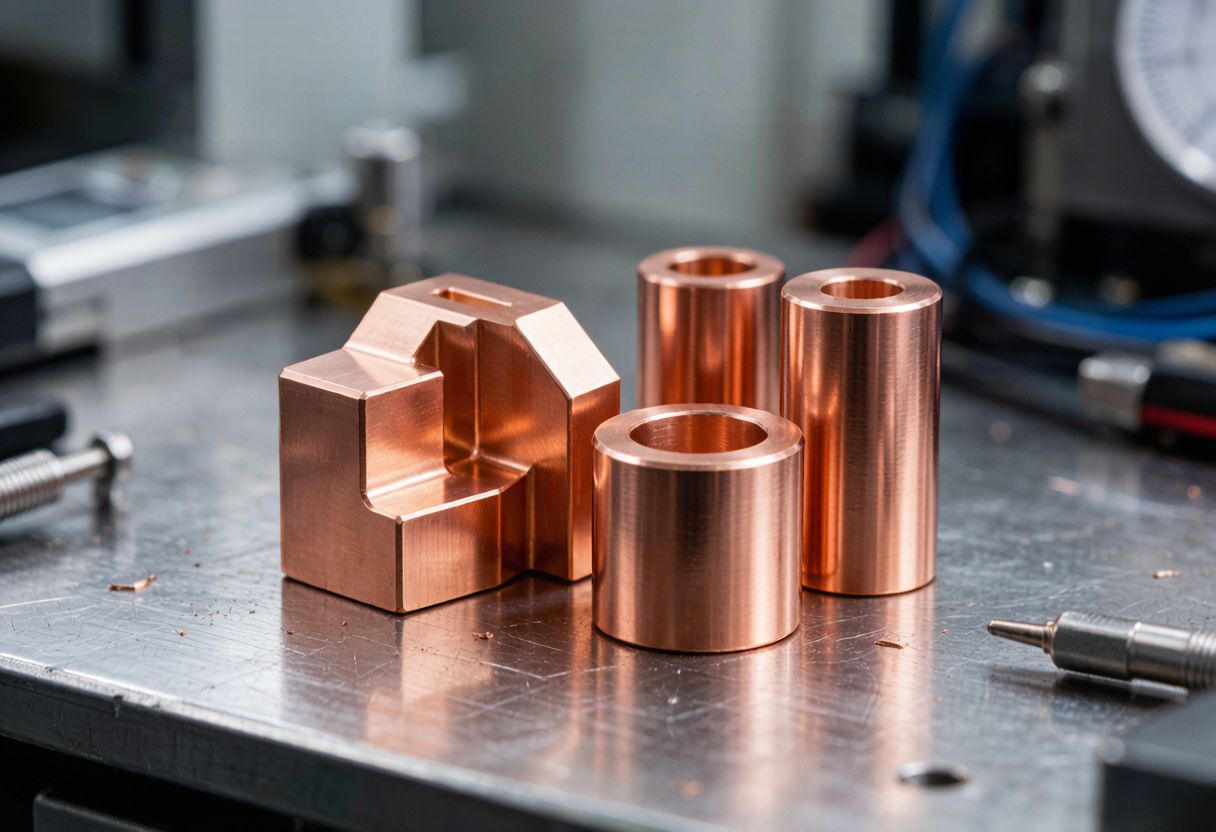
Por qué los sistemas eléctricos de Toyota dependen de piezas estampadas de cobre rojo de alta conductividad
¿Qué son las piezas estampadas de cobre rojo?
Estos son componentes estampados a partir de cobre rojo de alta pureza (normalmente C11000 o C194), elegido por su superior conductividad eléctrica, incluso mejor que la del aluminio o el latón. A diferencia de las aleaciones de cobre genéricas, cobre rojomantiene su integridad bajo vibraciones, ciclos térmicos y exposición a fluidos del compartimento del motor. Por eso Toyota los especifica para:
●Sistemas de conexión a tierra eléctrica.
●Conectores de terminales de batería.
●Soportes de montaje de sensores y ECU.
●Interfaces de arneses de cableado de alta corriente.
¿La clave? No son simplemente “cortados y doblados”. Se estampan con precisión utilizando prensas de troquel continuo de 300T, y luego pasan por decapado y pasivación para eliminar la oxidación superficial y mejorar la resistencia a la corrosión, algo especialmente importante en ambientes húmedos o salinos como regiones costeras o condiciones de carreteras invernales.
El proceso de fabricación
No encontrarás estas piezas fabricadas en una prensa manual. Así es como normalmente se producen:
1.Selección del material – Solo se utilizan tiras de cobre rojo de alta conductividad (normalmente de 0,3 mm–1,2 mm de grosor).
2.Estampado con troquel continuo – Una máquina de estampado con troquel progresivo de 300 toneladas forma la pieza en un solo movimiento fluido; piensa en ello como un cortador de galletas de alta velocidad, pero con precisión a nivel micrométrico.
3.Decapado y pasivación – Un baño ácido elimina rebabas y óxidos superficiales. La pasivación añade una capa protectora contra la corrosión futura.
4.Control de calidad – Cada lote se verifica para comprobar la precisión dimensional (a menudo ±0,05 mm), la conductividad y el acabado superficial.
5.Embalaje – Carcasa especial de espuma + bolsa de PE + caja de cartón, porque estas piezas suelen enviarse a plantas de ensamblaje donde incluso un arañazo puede provocar una parada de la línea.
Por qué Toyota (y los fabricantes de equipos originales como ellos) confían en este proceso
Toyota no solo compra “piezas de cobre”. Compra componentes compatibles con OEM, trazables y repetibles. Eso significa:
●Consistencia – Cada pieza debe coincidir exactamente con el dibujo CAD.
●Durabilidad – Debe soportar más de 10 años de ciclos térmicos y vibraciones.
●Eficiencia de costos – El estampado de gran volumen mantiene bajo el costo por unidad, algo crítico para la producción en masa.
Por eso proveedores como Xiamen Jiaxin Precision Metal Co. (un socio OEM reconocido) suelen ser seleccionados para estos trabajos. No solo estampan metal, sino que diseñan el proceso en torno a las especificaciones de Toyota.
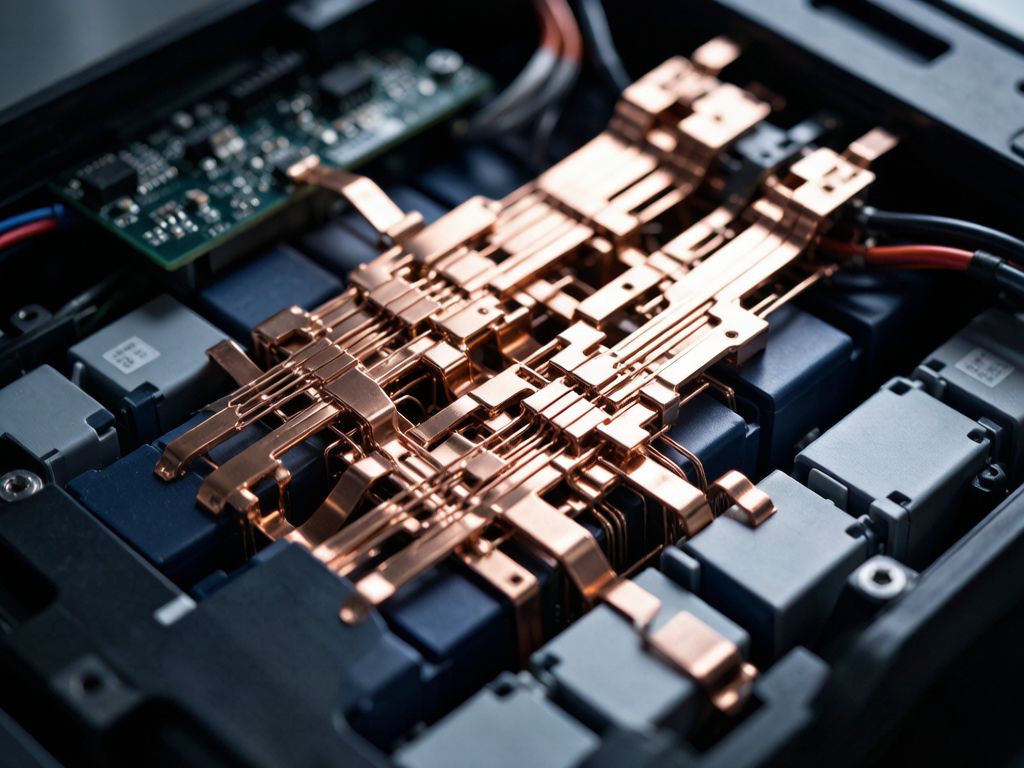
Tendencias de la industria y próximos pasos
●Miniaturización – A medida que crecen los vehículos eléctricos y los híbridos, las piezas de cobre se vuelven más pequeñas pero transportan más corriente. Pensemos en barras colectoras microestampadas para paquetes de baterías.
●Automatización – Más fábricas están integrando sistemas de visión con IA para inspeccionar piezas estampadas en tiempo real.
●Sostenibilidad – Algunos OEM están impulsando el uso de contenido de cobre reciclado, aunque la pureza del cobre rojo todavía hace difícil reemplazarlo.
Reflexión final
La próxima vez que veas el compartimento del motor de un Toyota, observa con más atención. ¿Esas pequeñas piezas de cobre? Son héroes silenciosos. Y detrás de ellas hay toda una industria, desde diseñadores de troqueles hasta ingenieros de estampado y auditores de calidad, trabajando para garantizar que tu automóvil arranque, se cargue y funcione sin problemas.
Si estás buscando piezas estampadas de cobre rojo para Toyota u otros OEM, asegúrate de que tu proveedor entienda no solo el material, sino también el proceso, porque en la industria automotriz “lo suficientemente cerca” no es suficiente.
¿Listo para adquirir o conocer más?
→[Enviar consulta]para piezas estampadas de cobre rojo compatibles con OEM.
→ Síguenos en [Facebook] | [WhatsApp] para recibir actualizaciones.
Categorías
último blog
 33#Building Huli Industrial Zones, Meixi Road, Xike Town, Tong'an Area, Xiamen,China


© Derechos de autor: 2026 Jiaxin (Xiamen) Precise Metal Co.,Ltd. Reservados todos los derechos

IPv6 red apoyada
Escanear a wechat